 ESPAÑOL
Cyathea conjugata (Spruce ex Hook.) Domin
Caracteres clave
- Indusio ausentes.
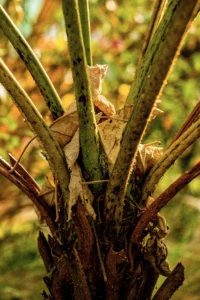
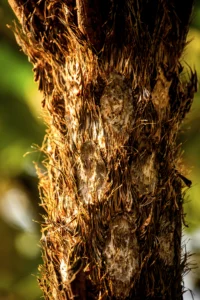
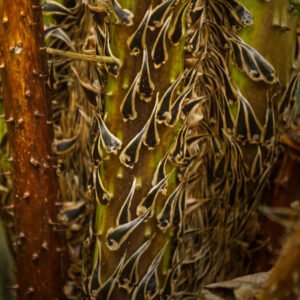
- Escamas del pecíolo con márgenes bien desarrollados; sin dientes cortos ni cilios largos.
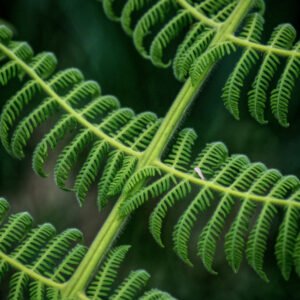
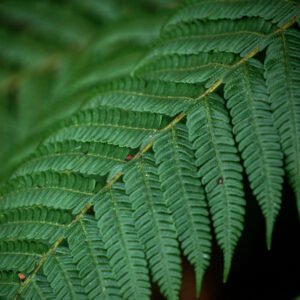
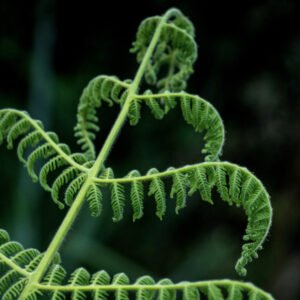
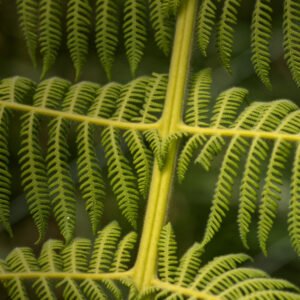
- Pínnulas más grandes de 10 × 2 cm o mayores, sésiles; las pínnulas proximales a menudo reflejas y cubriendo parcialmente el raquis.
- Escamas del pecíolo bicolores, con centros de color marrón a negro.
- Paráfisis pálidas, blanquecinas e hialinas, de igual longitud que los esporangios.
Comparación diagnóstica
1) Cyathea conjugata
Rasgos diagnósticos
- Lámina más pilosa en la superficie abaxial que en la adaxial.
- Pelos mayormente restringidos a venas y ejes.
- Pecíolos glabros a glabrescentes.
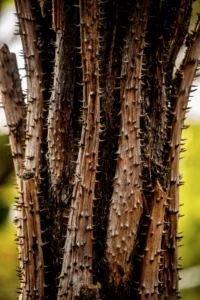
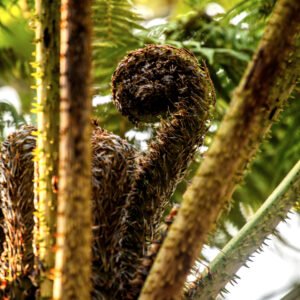
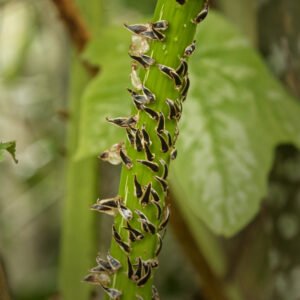
- Superficie del pecíolo lisa.
- Raquis liso a ligeramente escabroso.
Clave de campo
Si el pecíolo parece mayormente limpio y liso → C. conjugata
2) Cyathea tryonorum
Rasgos diagnósticos
- Mismo patrón de lámina (más pelos abaxialmente que adaxialmente).
- Pecíolos y raquis persistentemente pilosos.
- Superficies escabrosas.
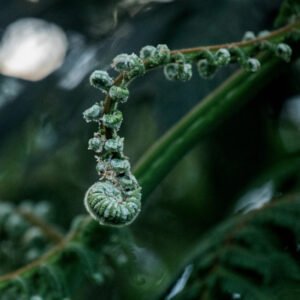
- Frondas jóvenes densamente cubiertas de pelos largos al desenrollarse.
Clave de campo
Si el pecíolo es claramente piloso y áspero, especialmente en frondes jóvenes → C. tryonorum
3) Cyathea trichiata
Rasgos diagnósticos
- Lámina igualmente pilosa en ambas superficies.
- Pelos presentes entre las venas.
- Pelos de hasta 1.5 mm de longitud.
- Soros inframediales a subproximales.
- Escamas marrones, planas y ovadas presentes en las nervaduras medias.
- Venas fértiles bifurcadas una vez.
Clave de campo
Si ambas superficies de la lámina muestran pelos visibles entre las venas → C. trichiata
Tipo
ECUADOR. Chimborazo: Chimborazo, agosto de 1860, R. Spruce 5745
(lectotipo K-000589936)
Royal Botanic Gardens, Kew Herbarium
Imagen:
https://d2seqvvyy3b8p2.cloudfront.net/0848e9ad37b66f63283801b3dddd51b6.jpg
Descripción original (Hooker & Baker, 1868)
-
- conjugata. Spruce; “caud. 40 ft. high, 1 ft. diam., aculeate, destitute of scales” (Spruce); st. 3 ft. l., 1 in. and more thick, prickly with short, stout, not very sharp spines; fr. 9 ft. l., ovato-lanceolate, coriaceous; prim. pinnae 23 pairs, “all exactly opposite, save at the very apex,” 2–3 ft. l.; pinnl. alternate, quite sessile, 4–5 in. l., 6–7 in. w., pinnatifid nearly to the costa; lobes linear, from a broad base, acute, crenato-serrate at the slightly recurved margin; sori rather small, close to the costule, one to each serrature; rachises (all) and costae and costules rusty-pubescent and hairy. — Spruce, mst. in Hb. nostr.
Hab. Chimborazo, alt. 3,000–4,000 ft., Spruce, n. 4745. — Very remarkable for the exactly opposite prim. pinnae: the second ones are alternate.
Distribución y hábitat
Colombia, Venezuela, Ecuador, Perú y Bolivia entre 1100–2750 (–3100) m en bosques montanos húmedos.
Conservación
El Apéndice II de CITES incluye especies que actualmente no están amenazadas de extinción, pero que podrían llegar a estarlo a menos que el comercio esté estrictamente regulado para evitar un aprovechamiento incompatible con su supervivencia.
Referencias
Lehnert, M. (2016). A synopsis of the exindusiate species of Cyathea (Cyatheaceae–Polypodiopsida) with bipinnate-pinnatifid or more complex fronds, with a revision of the C. lasiosora complex. Phytotaxa, 243(1), 1–53. https://doi.org/10.11646/phytotaxa.243.1.1
Hooker, W. J., & Baker, J. G. (1868). Synopsis filicum; or, A synopsis of all known ferns, including the Osmundaceæ, Schizæaceæ, Marattiaceæ, and Ophioglossaceæ (chiefly derived from the Kew herbarium). R. Hardwicke. https://archive.org/embed/synopsisfilicumo00hook
ENGLISH
Cyathea conjugata (Spruce ex Hook.) Domin
Key Characters
- Indusia absent.
- Petiole scales with well-developed margins; short teeth and long cilia absent.
- Largest pinnules 10 × 2 cm or larger, sessile; proximal pinnules often reflexed and partially covering the rachis.
- Petiole scales bicolorous, with brown to black centers.
- Paraphyses pale, whitish, and hyaline, equal in length to the sporangia.
Diagnostic Comparison
1) Cyathea conjugata
Diagnostic traits
- Lamina more hairy abaxially than adaxially.
- Hairs mostly restricted to veins and axes.
- Petioles glabrous to glabrescent.
- Petiole surface smooth.
- Rachis smooth to slightly scabrous.
Field clue
If the petiole appears mostly clean and smooth → C. conjugata
2) Cyathea tryonorum
Diagnostic traits
- Same lamina pattern (more hairs abaxially than adaxially).
- Petioles and rachises persistently hairy.
- Surfaces scabrous.
- Young fronds densely long-hairy when unfurling.
Field clue
If the petiole is clearly hairy and rough, especially in young fronds → C. tryonorum
3) Cyathea trichiata
Diagnostic traits
- Lamina equally hairy on both surfaces.
- Hairs present between veins.
- Hairs up to 1.5 mm long.
- Sori inframedial to subproximal.
- Brown, flat, ovate scales present on midveins.
- Fertile veins forked once.
Field clue
If both surfaces of the lamina show visible hairs between veins → C. trichiata
Type
ECUADOR. Chimborazo: Chimborazo, August 1860, R. Spruce 5745
(lectotype K-000589936)
Royal Botanic Gardens, Kew Herbarium
Image:
https://d2seqvvyy3b8p2.cloudfront.net/0848e9ad37b66f63283801b3dddd51b6.jpg
Original Description (Hooker & Baker, 1868)
- conjugata. Spruce; “caud. 40 ft. high, 1 ft. diam., aculeate, destitute of scales” (Spruce); st. 3 ft. l., 1 in. and more thick, prickly with short, stout, not very sharp spines; fr. 9 ft. l., ovato-lanceolate, coriaceous; prim. pinnae 23 pairs, “all exactly opposite, save at the very apex,” 2–3 ft. l.; pinnl. alternate, quite sessile, 4–5 in. l., 6–7 in. w., pinnatifid nearly to the costa; lobes linear, from a broad base, acute, crenato-serrate at the slightly recurved margin; sori rather small, close to the costule, one to each serrature; rachises (all) and costae and costules rusty-pubescent and hairy. — Spruce, mst. in Hb. nostr.
Hab. Chimborazo, alt. 3,000–4,000 ft., Spruce, n. 4745. — Very remarkable for the exactly opposite prim. pinnae: the second ones are alternate.
Distribution and Habitat
Colombia, Venezuela, Ecuador, Peru, and Bolivia at 1100–2750 (–3100) m in humid mountain forests.
Conservation
CITES Appendix II includes species that are not currently threatened with extinction but may become so unless trade is strictly regulated to prevent utilization incompatible with their survival.
References
Lehnert, M. (2016). A synopsis of the exindusiate species of Cyathea (Cyatheaceae–Polypodiopsida) with bipinnate-pinnatifid or more complex fronds, with a revision of the C. lasiosora complex. Phytotaxa, 243(1), 1–53. https://doi.org/10.11646/phytotaxa.243.1.1
Hooker, W. J., & Baker, J. G. (1868). Synopsis filicum; or, A synopsis of all known ferns, including the Osmundaceæ, Schizæaceæ, Marattiaceæ, and Ophioglossaceæ (chiefly derived from the Kew herbarium). R. Hardwicke. https://archive.org/embed/synopsisfilicumo00hook
AUTOR: Andrés Felipe Montoya López

